Category: The Electronic Corner

Neversleep Dirk Pogrzeba the electronic corner podcast musicale

Neversleep Interview

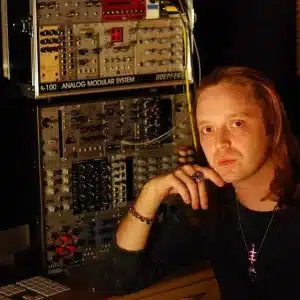
THE ELECTRONIC CORNER Neversleep Songwriting Meets Sound Design in a Modular Environment Dirk Pogrzeba (Neversleep) says: What I really love about Berlin is its openness of culture Sound design has to support a musical idea An arpeggio is a repeating melodic line which builds up an energetic flow Now I own everything I need for any kind of sound design Neversleep is the solo project of Dirk Pogrzeba, a Berlin based musician with a huge modular arsenal to play with. Here is his interview for ‘The Electronic Corner’. Sir Joe: Your music is influenced by early 80s analog synths bands, by your own admission. Which bands or artists would you name as your main source of inspiration? Neversleep: I would say, I have quite a lot of influences. In the early eighties, analog synthesizer bands and the new wave movement started as an answer to punk, mostly in the UK. This is just one influence, but it’s a major one because it’s the time when I was raised, musically. I think everybody can relate to this: you are young, you listen to a specific song for the first time, your jaw drops completely and you think: “What was that?” For example, I remember listening for the first time to a song like ‘Fade to Gray’ by Visage, or stuff from Depeche Mode or Ultravox. That was jaw dropping, in a way, and I always found that deep sound design, which now I know was coming from analog synthesizers, super interesting. You have warmth and deepness, in that very sophisticated sound design. In the early eighties it was very limited, in a way, but it was functional to the musical idea behind a song, and this is what I found really interesting. Other influences I have are more modern, because I don’t want to be stuck in the eighties. Times moved on, and so did electronic music. There are really lots of very interesting artists out there. I really love Moderat, from Berlin, who blend the layers between analog and digital, and between classic songwriting and experimental electronic sounds. They also have great vocals and interesting song ideas. Thom Yorke, Radiohead and Trentemøller are other influences.   SJ: In your social posts you often mention the Berlin Modular Society, and I know you are going to a meeting with them after this interview, so of course now I’m curious. What is the main purpose of this entity and how can you become a member? Neversleep: I’ve been making electronic music since 2002, after a period where I was playing in alternative pop-rock bands. I started my modular journey in 2019, and from the beginning I’ve been looking for ways to perform live and reach out to like-minded people. Berlin is the ideal place for an electronic modular musician. First of all, you have this big store, ‘Schneidersladen’, which is one of the major stores in the world, for modules. Then you have the ‘Superbooth’, a yearly trade fair focused on modules, so there’s a lot going on. But when I started my modular journey, I didn’t know anybody and I thought: “I want to reach out to people, I want to do collaborations”, because I had very good experiences with collaborations. One day, I found the guys who were running the Berlin Modular Society. It was during corona virus, so they were only doing live streams. I asked them how I could perform in their live stream and they said: “No problem, you’re on the list for next time”. These guys are super lovely and really open minded, so it was pretty easy and nice to get to know them and learn more about what they do. The Berlin Modular Society is currently a group of six people who organize live electro modular performances in clubs, and we do it on a monthly basis. Today, we are having our 37th live performance. How do you get into that group? In my case, I first played a couple of concerts for them, so I entered in their outer circle of playing artists. Since in my day job I do a lot of agile coaching and project management, one day I asked the guys if I could help them with the management and organization of the circle, they gladly accepted my offer and so, since last October, I’ve been part of the organization committee, so to speak. I really love to contact other artists, organize events and meet other modular musicians. We are in Instagram under Berlin Modular Society, and we have a website, Berlinmodularsociety.com If any modular artist in or out of Berlin is interested to deal with us, we have a submission form, so they just have to drop us an email. SJ: Cool! Now, we’ve just learned that living in Berlin makes your life easier in terms of of facilities, acquiring gears and stuff like that, but what about inspiration? Does living in Berlin help you also with that, or not really? Neversleep: Yes it does, absolutely. Everything is very close and the community is quite small, so everybody knows everybody. In fact, I expect to meet a lot of known people today at the event. What I really love about Berlin, though, because it feels liberating for my music, is its openness of culture. Here, it’s really very easy to blend genres, you don’t feel forced to do one specific thing. In other places, when you get away a bit from the cliche, people look at you and say: “What are you doing? You’re not following the rules”. But in Berlin, people just don’t care, or they are even more interested, when you bring in a special twist. I’m not so much involved with the electronic communities of other cities, but I heard that probably this openness is a Berlin specific thing. SJ: I do agree. I lived six years in Munich and, even though I had a wondeful time, I must say Bavarians are quite strict in lots of things. Anyway, let’s move on.

Leggi Tutto »
QEK Junior Dominic Daub

QEK Junior Interview

THE ELECTRONIC CORNER QEK Junior Interview With Dominic Daub: Minimal Wave Secrets Revealed Dominic Daub (QEK Junior) says: Often our lyrics seem to be a bit dadaistic It’s not so bad when the music is very repetitive I never thought that one day I would record synth music MySpace was very, very important for us We met Dominic Daub of QEK Junior and we had a very nice chat about minimal wave and much more.Let’s find out what he had to say in this exclusive interview for The Electronic Corner. Sir Joe: QEK Junior: Where does it come from and why you decided to call your project like that? Dominic Daub: QEK Junior is the name of a small trailer produced in the former East Germany.We decided to name our project after this trailer because it’s very minimalistic, just like our music.   SJ: Do you sing in German because you feel more comfortable writing lyrics in your native language, or is it because for the kind of music you make, you feel that a hard sounding language like German is more appropriate than a mellow sounding language? DD: I guess it’s both, because when we started making music we were influenced a lot by bands like DAF, who sang in German, so we started to use German vocals too. And of course, as a German native speaker, for me it’s much simpler to speak and sing in German.So, you can say it’s because we are German and we are influenced by German bands like DAF, a bit of Kraftwerk, of course by Depeche Mode, but mostly by DAF and Nitzer Ebb. SJ: Another question for those who don’t understand German: Do you have recurring themes in your lyrics, or do you just write about anything that comes in your mind? DD: I would say that often our lyrics seem to be a bit dadaistic, or nonsense lyrics, as some people say, but the thing is that all our lyrics have a deeper meaning.For example, our latest album, ‘Anomie’, deals with politics, but you don’t get it at the first hearing.I don’t like to write lyrics that are quite obvious. For me, it’s important to have lyrics where people have to think about, because their meaning at the first hearing is not obvious. SJ: As you mentioned yourself, your songs are quite minimalist in terms of sounds and melodies. In fact, ‘minimal wave’ is the label given to the sub genre of electronic music that you do.Somebody may think that you like to make your life easy in the studio because, of course, fewer melodies and fewer sounds mean that the recording process, the mixing, the mastering, everything is easier compared to when you have something more complex.What these people don’t consider, though, is the risk that the song becomes too repetitive and boring.That’s why I think minimal wave is quite challenging and also that’s why I would like to ask you what kind of tricks you use, during the recording process, to make sure that a song doesn’t become too repetitive and people are hooked to it from the beginning to the end and want to hear more from you. DD: Well, I guess it’s not too bad if the music is very repetitive, and when you’re influenced by bands like Kraftwerk, DAF or Nitzer Ebb, it’s inevitable that your songs, like theirs, are quite repetitive.Having said that, when I do some recordings in the studio, I often introduce very light changes using filters cut offs, for example, or a different drum pattern for part of the song.These differences are very, very difficult to notice, but they are there. We seldom use only one sound for the whole song from the beginning to the end.So, it’s got a lot to do with filters, attacks, stuff like that. SJ: So, it’s like subtle changes that people don’t realize are there, but actually they are what keep them interested until the end. DD: Yes. However, when you listen to songs like ‘Verschwende deine Jugend’ or ‘Der Mussolini’, by DAF, you notice that they are very repetitive and the sounds never change. Yet, they work, and they are great for dancing. We also do some sort of music for dancing, so to speak. I want to add that, in the last few months, I started using gear that is not a typical synth but more a sort of noise generator, to add noise to the sound. I think you will hear it in the next album.   SJ: Great. What you just said fits perfectly with my next question, which is: Are you more an analog musician, meaning that you rely mostly on hardware in your studio and live, or a digital musician? DD: I never use computers in the studio, the main reason being that I work the whole day in an office, so I already spend the whole day with computers. I just have a Tascam multitrack recorder, with 24 tracks, and I use a very old Yamaha QY 700 sequencer, and only hardware synths. My first synth was a Quasimidi Quasar, from Germany, I guess it’s about thirty years old now, and the last is a Behringer Toro. It’s a Moog Taurus clone, it has just arrived and I will check it later.I use different kinds of hardware, things like MeeBlip. I just use strange synths, not the mainstream ones.   SJ: Actually, you started your career as a guitarist, didn’t you? DD: Yeah, that’s true, and when I started to record synth music, it came as a sort of unexpected thing.When I left the band I was playing with as a guitarist, I finished my master degree and then I decided to build up my own little studio, with an 8 track recorder by Tascam and a sequencer, because I wanted to have some tracks to play guitar on.Then, I realized it was much simpler to play and record this kind of music, than using guitars.However, I still write a lot of the music on the guitar, and when I write a

Leggi Tutto »
Paradox obscur

Paradox Obscur Interview

THE ELECTRONIC CORNER Paradox Obscur Raw and Pure: Unveiling Paradox Obscur’s Studio Process Paradox Obscur say: We are not fond of writing in a digital environment Usually, we write music first We like the voice to be very natural Singing is a liberating experience Kriistal Ann and Toxic Razor are Parodox Obscur, a duo from Athens, Greece.Let’s discover their music world in this exclusive interview for The Electronic Corner Sir Joe: In your Instagram profile, you define yourselves as creators of extravaganza electronica. Who came out with that definition and what do you mean by that? Toxic Razor: Well, it was something that we read in a review for our latest album, ‘Morphogenesis’. We liked the description of our music, so we thought it would be a cool thing to tag our music like that. Generally, I’m not so much into tags. Sure, they can be helpful for the press or for people to find out new music, but in our case I would say that we just play electronic music, or synthesizer music. That’s it.   SJ: Actually, I did find one extravaganza about you, in the sense that you’re one of the very few guests of this podcast I have interviewed, or I will ever interview, for which it doesn’t make sense to ask: “Do you use Logic, Pro Tools or maybe Ableton”, because you don’t have a computer in your studio, you still record using a console.What is the advantage of this approach? TR: I like the way bands in the 70s, 80s and 90s were playing.Whether it was electronic or rock band, two, three or four people were playing instruments. This is the approach I use when writing music for Paradox Obscure … it is like jamming.I like to work with hardware instruments, drums machines, synthesizers, sequencers.I’m not so much fond of writing in a digital environment because I like to have control over physical stuff, I like to touch knobs, play chords or program drum machines in a live environment.I find writing music using a computer sterile, and you miss the spirit of people jamming.Of course, for other people composing in a computer works. But in our case, I think we are more comfortable working with hardware gear. SJ: So, the fact that it took you 18 months to record your latest full album, ‘Morphogenesis’, has nothing to do with this kind of approach, right? TR: No. I think it was the longest period it took to reach the final result, unlike our previous albums.For example, our first album was recorded in less than a month, but with Morphogenesis we wanted to work on the tunes, the melodies, the vocals in all details and try some things that we hadn’t tried before in mixing.Then there was also the production of the videos, and we spent many months in the studio doing the mix for Anna’s voice.It was the first time that we mixed vocals in a studio because we wanted to use a different approach, and I think in the end it worked very well. SJ: I agree. Now, I’m totally fascinated by the video for one song of this album, ‘Animal Reactor’. Where did you get all those Chinese, I assume by the name, dancers? Kriistal Ann: Well, usually I’m the one taking care of the visuals of the band, and I dig in internet for video makers who can fit in our aesthetic and can give our songs something very special that makes it blend with the video.So, in the previous summer I was searching a lot and I was very disappointed because I couldn’t find anybody, but suddenly, after many months, I found a very nice videographer from Taiwan.Because he had many big projects, at first I was shy to contact him, but finally I wrote him about us, and that we had a song for which we would like him to make a video.His answer was very positive and very enthusiastic, so we got together and he proposed some ideas.I described to him what I would like to achieve and I think he did a great job with it. We are very proud of this video. SJ: Yeah, you should be!Let’s talk about the lyrics. I know that for Paradox Obscur you sing in English, French, German, did I miss any other language? KA: Sometimes in Greek. SJ: Okay, good. I would like to ask: Is it the mood of the song and the music that makes you choose which language to use, or is it the opposite, meaning that you write the lyrics first, and then you write music to fit with the language of the lyrics? KA: Usually we write music first, and then we adapt the lyrics. So, it’s the feeling of the song, whether it’s soft or hard, that makes us choose the language.   SJ: Are you totally interchangeable or does each of you have a specific role for song composition, recording, mixing and mastering? How do you share “studio duties”? TR: Usually, we don’t have a specific role.For example, Anna is able to write lyrics and/or a bass line, lead melodies, and the same goes for myself.We also work together on vocal melodies and we decide together about the music parts, the instruments, the sound of each instrument, the mixing, the effects, and so on.I think it’s a balanced situation. SJ: Kriistal Ann, your voice is very strong and powerful, and of course the main reason is that you’re an amazing vocalist, because if you don’t start from a strong base, there is nothing you can do to turn an average singer or an average performance into something amazing.Despite popular belief, in fact, if you can’t sing, nothing will make you sing well.Having said that, we all know that the voice that we hear in a record or live is never 100% natural. So, would you mind sharing with us the typical effect chain that you use for vocals, like compression, reverb, or any other effects you use? KA: Actually, we like the voice to be very natural, so

Leggi Tutto »
Goblin Stefano Rossello Argento

Goblin Producer Stefano Rossello

THE ELECTRONIC CORNER Stefano Rossello Goblin Producer – Dario Argento’s Guest – Rustblade Studio Owner Goblin Producer Stefano Rossello says: Dario Argento is a great artist and a great person In Italy, they only believe in streaming I really like to make different kinds of music You cannot recreate a true analog sound with a virtual instrument Stefano Rossello is a man with some interesting stories to share, thanks to his role as music and now even film producer, dj and musician with a big collection of vintage synths in his Rustblade studio.Let’s find out more about him. Sir Joe: Stefano, recently you have met the great maestro Dario Argento. So, before we dive deep into music, I have to ask you, how was it? How is he as a person? Stefano Rossello: He’s a great artist, a great person, and I felt really comfortable at his place.He invited me because I printed an old film of his, ‘Le Cinque Giornate’, and he wanted to meet me to thank me for doing this for Italy, since in Italy this film has been out of print for a long time.So, I printed it with my label and it was my first movie production. My label, in fact, is a record label and I released a lot of soundtracks of Argento’s movies.I really had a good time with him, we talked about cinema, directors like Antonioni and Kubrick, it was a really special time for me. SJ: So, from my understanding, he’s a humble person, right? He’s not one of those who say: “Hey, I’m Dario Argento, who the hell are you?” SR: No, absolutely. He was really spontaneous and he liked to talk about movies and music.He likes to have some new energy in his house. SJ: Of course, the other connection you have with Dario Argento is because of Goblin, the band who has created most, if not all, the soundtracks of his movies, because you are Goblin’s producer.That means they release their music through your record company Rustblade, right? SR: Yes. For example, I released the new Prog Rock version of ‘Suspiria’ and I released ‘Profondo Rosso’.Besides Goblin, I also have Morricone, namely his soundtrack for another Argento’s movie, ‘Il Gatto a Nove Code’. SJ: I was planning that as my next question, actually, which other artists you are producing… SR: Yeah, Morricone is one but I also have some artists from the alternative scene, like Lydia Lynch or Edward Ka-Spel of ‘The Legenday Pink Dots’. I released an album of ‘The Young Gods’, I produced a guy from Einsturzende Neubauten called F.M. Einheit and I also produce my own projects.The latest one is called ‘Tibia’ and is a retrosynth wave project inspired by soundtracks. That’s because I make music too. SJ: Oh yes, later we will talk about your activity as a musican, but first I would like to ask: As the owner of a record company, what is your role? SR: First, I look for good music which may go well with my label. When I find a good artist, I contact them proposing a collaboration.When I have received the master from the artist, I find a good packaging and take care of everything else needed to print the album, then I send the copies to my distributors around the world: United States, Germany, Italy, Japan and so on. SJ: In a time where a lot of artists are self producing and streaming platforms are dominating, is it still profitable to run a record company, or is it just the love for music and the respect you have for the artists that make you keep going? SR: It’s a bit of both. I work with big names and I have a good response outside of Italy.The problem in Italy is that now physical products are not seen is a favorable way, they believe only in streaming. Outside of Italy is not like that, because formats like vinyl or CD or special box set are still respected.So, even though sales are not spectacular, they are enough to make for a living. Abroad there is a huge respect for our artists, especially Goblin and Morricone, so as long as I find a way to sell their works abroad, I’m ok. Another example is two records of Nino Rota for Fellini films that I printed: One is ‘Fellini – Satyricon’ and the other is ‘Roma’. Sales were really good outside of Italy, because Fellini is very respected. I don’t know why, but sometimes in Italy we forget what we have, we forget our roots. SJ: I understand what you mean. Now, tell us about your activity as a musician. From what I heard, you are or have been involved in several projects.Tell us something about them, please. SR: Let’s start with my first project, called ‘Bahntier’.It was an industrial project where I was the singer and included also a drummer from the United States who lives in Italy and my friend Filippo Corradin. We did it for about ten years.Then I turned to a completely different kind of music: from industial, which is strong and hard music, to ambient.I took a lot of inspiration from Tangerine Dream, for example, but also Goblin, Claudio Simonetti, and Brian Eno.I liked the idea to make something completely different and atmospheric. The good thing of coming from industrial music is that I already had a lot of synthetizers, so I could keep using them selecting completely different sounds, with an atmospheric and new romantic mood.I’m really happy because for my last concert I played in Bomarzo, in its big park called ‘Parco dei Mostri’, and I played my ambient stuff on my own, with some projections in the background.I really like to make different kinds of music. (You are now invited to watch the video at the end of the article, where Stefano shows his synths, starting at 12:32 until 31:46) SJ: I see that you are using Logic to record your music, right? SR: Yes, I use Logic because my music partner uses it.After I have recorded

Leggi Tutto »
Sergio-Calzoni ILUITEQ interview intervista

ILUITEQ Sergio Calzoni

THE ELECTRONIC CORNER ILUITEQ Exploring the Art of Ambient Music Composition with Sergio Calzoni ILUITEQ (Sergio Calzoni) quotes: Working with other people is always a more rewarding experience With ambient music, everything at first is linked to a feeling I had a very exciting experience playing live in a church In ILUITEQ, roles are almost identical ILUITEQ is the latest project that sees the involvement of Sergio Calzoni, a musician who has explored a range of music styles throughout his career.In ILUITEQ, he shares a variety of roles in music development, production, and mixing together with his music partner Andrea Bellucci.Let’s discover more about it and many other things. Sir Joe: Hello, Sergio. You’ve been involved in several projects so far, and not all of them had to do with ambient music. Can you tell us in which projects you have been involved in the past, those you are involved in now, both solo and in cooperation with other people, and what was/is your role in them? Sergio Calzoni: Starting from the very beginning, my first project was ‘Alma Mater’ in the 90s, so a long time ago.It was an electronic duo, with me taking care of the production and development of the tracks, that is arrangement and composition. Valerio Biagi was the singer, he provided all the lyrics and the singing for the tracks I developed. That project was strictly connected to the Dark Wave movement, which at the time was a big source of inspiration for me.We tried to be a bit different to all the others darkwave acts, so we sang in Italian while the majority of the other bands in this music style sing in English.Afterwards I felt the need to explore new music territories. Around 2000, 2001, I got really excited with the new trip hop movement that was taking place, especially in UK: acts like Massive Attack, Portishead, and so on.So, I decided to explore this music genre and I started to collaborate with other musicians. In the band ‘Act Noir’ I played keyboards and also provided electronic parts with a sequencer, although we sounded more like a typical rock band.There was a drummer, a guitar player, a bass player and a Danish singer, because at that time I was living in Denmark, where I stayed for almost four years.It was a challenge because at that time internet was still at an early stage of development and diffusion but we managed, thanks to internet, to keep in touch with my Italian mates.In Denmark I had the chance to build my first home studio, with ProTools and an old Digi 001 audio interface. It was really exciting, because I could finally take care of all the parts related to the production of an album.All the recordings were done by me in Denmark and when I was coming back to Italy on holiday, I recorded all the parts of my Italian mates, so guitar and bass. Drums were recorded in a proper studio because we had no equipment for recording an acoustic drum set. Then I mixed all the parts, took care of the production and we finalized the album, that we made basically between Italy and Denmark.With Act Noir we released two albums, then I embarked in another collaboration that was very significant for my music career.The band was ‘Colloquio’, which was an already existing project. I joined the band in 2007, or maybe 2006, because its leader, Gianni Pedretti, wanted me to be part of it for releasing an album.In this project I was taking care of all the electronic parts and I was involved in the production. In particular, I did all the mixing and since we were both really satisfied with this partnership, we continued to work together for a follow up.The new album was called ‘L’Entrata e l’Uscita’, and it gaves us the chance to play live in a lot of venues all over Italy.Afterwards, I started to feel the need to give form to a solo project. So, for the first time I decided to take care completely of all the music aspects, and I also decided to explore more ambient related music.That’s how a project called ‘Orghanon’ started, and I still release music with that moniker. This kind of project was very new to me because I never made music completely by myself. It was also very challenging because sometimes when you are completely on your own you risk to lose yourself. You must be very disciplined, you need to have rules, otherwise things can go out of focus.After Orghanon, I got in touch with an Italian musician with a very long list of works released in many different music styles. His name is Andrea Bellucci. In the first part of his career, Andrea was involved with members of Planet Funk, before they were called Planet Funk, and he released a lot of techno and dance music.Having the chance to collaborate with such an experienced musician was a real thrill to me. Andrea and I started an electronic ambient duo called ‘ILUITEQ’.So far it has been a very fortunate project because we had the chance to release albums first with a UK based label, while now we have a long term contract with a label based in Oakland, close to San Francisco. It is called n5MD and is a quite important label for ambient music.In ILUITEQ, roles are almost identical. We both develop tracks, we both produce but I alone take care of all the mixing. SJ: Thanks a lot for the very detailed explanation.Now, you mentioned the danger of working solo vs working in collaboration with other musicians, because of the risk of losing focus and stuff like that.Is there anything else you wish to add about the difference between working in a solo project and working with other people? SC: Well, I think working with other people is always a more rewarding experience, because you receive different inputs from other people and quite often they have

Leggi Tutto »
ODRZ Massimo Mascheroni the electronic corner podcast musicale

ODRZ

THE ELECTRONIC CORNER ODRZ Musical Rule Breaking and Experimentation: Meet Massimo Mascheroni Massimo Mascheroni quotes: ODRZ is an entity Having access to a broad range of music opened my mind as a listener The first step for creating our music is to have a project We open our sound library, we select some sounds and we start to play ODRZ is an Italian post industrial project featuring Massimo Mascheroni and Antonio Maione. This is an interview with Massimo, a music enthusiast with an eclectic taste who draws inspiration for his music from a wide pool of influences. Sir Joe: Massimo, you are one half of ODRZ, which stands for…? Massimo Mascheroni: Actually, it means nothing. The story is the following: for 8 years Antonio and I played in a cyberpunk industrial power trio, called ‘Onde Rozze’, or ‘Rough Waves’ in English. When the third member of the band quit, we squeezed the name to ODRZ. SJ: I see. We can say ODRZ music is actually closer to noise experimentation than to music as we know it, with verse, chorus, maybe a bridge and so on. Also, I know you are actually in love with many different kinds of music, from very romantic ballads to heavy metal. So, I was wondering: how come that from such a broad spectrum of music that you like and you could choose from, you ended up making something which is not really music? Is there a connection or is it pure coincidence? MM: I really don’t know. It is true that I’m not a conventional music listener, because I pass from japanoise, post industrial, industrial, post punk, new wave to easily listening, Italian pop music, progressive, italodisco, disco music and so on. I think that such a broad range of music opened my mind as a listener, and it made me propose music which is a mix of all the things I listen to. Even though ODRZ is mainly focused on industrial music and noise music, we are interested in adding something more musical to the noise, like psychedelic, for example. SJ: Earlier, when I introduced you, I said you are one half of the band, and you mentioned Antonio, your musical partner. What is your role and what is Antonio’s role in the band? MM: ODRZ is just an entity. Each of us is one half of this entity and we don’t have a specific role in the band. We play different kinds of instruments, but we are just one half to the other. SJ: How do you create your songs for ODRZ? In my case (I mostly do synth-pop) I kind of dream the skeleton of the song, and I only have to ‘dress’ it when I am in the studio. With the kind of music you make, though, I think such an approach is not feasable. So, how do you actually start and then develop a song? MM: The first step is to have a project. We start from a project, and then we create some rules for it. Then we open our sound library, we select some sounds and we start to play. As we play, we improvise and when we come out with something we like (you may call it the skeleton of the song), we add more stuff. We don’t have rules about the length of the song, as it depends of the project. We had some project that were 30 seconds long and others that lasted one hour. (You are now invited to watch the video below, starting at 07:23. Believe me, it’s something you don’t want to miss ) ODRZ official website

Leggi Tutto »