Category: Asia trips

Jogyesa temple Seoul Seul

My South Korea

Sergio Bersanetti My South Korea 2 April – 17 May 2023 South Korea Presentation South Korea operates as a semi-presidential republic with a representative, multi-party democratic system. In this setup, the president, who is directly elected by the citizens, serves as both the head of state and the head of government. The nation covers the southern part of the Korean peninsula and is mainly characterized by mountainous terrain, interspersed with small valleys and narrow coastal plains. Its population exceeds 51 million people. This marked my second trip to this Asian nation. You can find details of my first visit in the article about Seoul. During this visit, accompanied by Ji Hun, I explored Busan and Jeonju. However, before delving into those adventures, I’ll share with you some other fascinating aspects of Seoul that I hadn’t had the chance to experience during my previous trip. https://youtube.com/watch?v=/p5jmp4DKMsM Presentation article on South Korea I hope you like it South Korea: Seoul, part two Suguksa is the sole golden temple in South Korea, tucked away to the north of Seoul. This hidden gem isn’t your typical tourist spot; you won’t find it in any travel guide, adding to its unique charm. Just to clarify, when we say “temple” here, we’re talking about a collection of structures. Suguksa Temple comprises four buildings, with one currently undergoing renovation. Unlike Japan, South Korea allows photography and filming inside most temples, which is great because these places are truly magnificent. Inside the first building, you’ll find not imaginary, but real people who once lived – you can even read their names under each figurine. The bigger ones are known as Arahans, considered to be like demigods. The last two photos show a building used for soul cleansing and the table with the steps for the ritual. As you can see, it kicks off at 7 p.m. on the first day and wraps up at 9 a.m. on the third day. The ritual involves a series of bowing, meditation sessions, and prayers, and you need to book ahead because only one person is allowed at a time. https://youtube.com/watch?v=/1eeppZ_tfVU Suguksa temple in Seoul What a lovely surprise it was! Now, let’s take a look at Seooreung Cemetery, a UNESCO World Heritage Site that holds five royal tombs dating back to the Joseon Dynasty. Here, when we say “tomb,” we’re talking about a specific arrangement of structures, and you’ll find this same setup repeated five times. It all begins with a Korean torii (if you’d like, you can draw a comparison to the Japanese ones I mentioned in my previous post) and a stone-paved pathway. Interestingly, this pathway is meant to be walked only from the right side, as the central path is reserved for those who participate in the annual remembrance ceremony. At the end of this pathway, you’ll encounter a structure known as a jaesil, which serves as the tomb keeper’s house. You can find more details about this in the inscription featured in one of the photos. Just behind the jaesil, or sometimes to its left or right, you can find an untouched little hill where the bodies of the king or queen and their partners lie at rest. These hills are completely natural. In all my articles there must be at least one museum, and the one you shouldn’t miss is the Seoul Museum situated right next to SeokPaJeong, which used to be the royal residence during the Chosun Dynasty. It is necessary to specify it because there are numerous ‘Seoul Museums’ scattered throughout the city. This museum is all about modern art, and it showcases some fascinating pieces. For instance, there are paintings that come to life thanks to inner light bulbs embedded within the frames, creating a captivating sense of depth in the artwork. Worth mentioning are also some sculptures that make sense when a light strategically placed in a specific spot casts striking shadows on the wall. The garden is very pretty and conveys a sense of peace. One day, during one of our tours, we walk past what used to be the residence of the previous Presidents of the Republic until just a few months ago. It’s interesting to note that the second-to-last president, a woman, and the third-to-last president, a man, are currently serving lengthy prison sentences. This highlights that even in South Korea corruption is not unheard of, but it’s reassuring to see that politicians here do face consequences when they mess up. Anyway, we decide to visit the residence, since we are there, however, we discover that making an online reservation well in advance is necessary for security reasons. Yet, when the guards see me, there is a sort of meeting involving the ticket and security personnel, until they decide to issue us a pass right there on the spot. Ji Hun is quite surprised, but I’m not, as every time I travel to Asia, I seem to encounter unexpected acts of kindness towards me. Now, let’s pause for a quick food moment. I had some pretty big expectations for this seaweed snack, but sadly, it turned out to be quite plain and overly greasy. The taste is a bit like prawn crackers… without the prawn! The Korean melon is roughly the same size as an orange. It looks pretty, but I have to admit, it left me a bit disappointed. It takes quite a bit of effort to clean and peel, yet in the end, you don’t get much to eat, and the taste is somewhat bland. If you’re still wondering about the importance of chili in this place, just take a look at the supermarket shelves stocked with bags weighing 2.5 kilograms and even more. Those intriguing rings you spot in that massive bag are Korea’s take on popcorn. They use the same ingredients, but they throw in a bit of rice flour. Jogyesa Temple in the heart of Seoul is a must-see, especially during Buddha’s birthday celebrations when the lighting is absolutely amazing. https://youtube.com/watch?v=/34JxadHHBsI Jogyesa Temple

Leggi Tutto »
Otowasan-Kiyomizu-dera-Kyoto Japan

My Japan

Sergio Bersanetti My Japan 26 March – 1 April 2023 Presenting Japan Japan is an island country in East Asia, located in the Pacific Ocean. Its predominantly mountainous territory comprises 14,125 islands, with the five largest accounting for approximately 97% of its total area of around 378,000 square kilometers. With approximately 126 million inhabitants, it ranks as the eleventh most populous country in the world. The Tokyo Metropolitan Area, with its 38 million residents, stands as the largest metropolitan area on the planet. I had the opportunity to visit a part of Honshu, the country’s largest island, during the cherry blossom season. I was accompanied by my trusty companion Ji Hun, whom you already met in my article about Seoul. His fluent knowledge of Japanese was a godsend because navigating the confusing English signs (when available) and the complex transportation system would have taken much more time if I had been on my own. I’m not trying to scare or discourage you from embarking on a journey to this beautiful country, but it’s only fair to warn you that proper preparation on how, where, and which bus and/or train tickets to purchase, for example, will save you some unnecessary headaches. You’ll learn something about it by reading the rest of the article, but for all the details, I recommend consulting specialized websites about the Japanese transportation system. For instance, Treksplorer explains the various options available to travel to Osaka and can be a good starting point, although I don’t agree with its claim that getting around that city is easy. But now it’s time to go. Wake up at 4 AM, and depart from Seoul at 7AM, heading to Kobe. Japan, here we come. Landing in Osaka and transfer to Kobe The experience with Air Busan was really great. A brand new Airbus A321, plenty of legroom, good food, and punctuality… not bad at all for a low-cost airline. Apparently, having five other low-cost carriers in Korea helps maintain a high level of service. Here’s an interesting tidbit: in Seoul, as the plane was taxiing away from the gate, all the ground staff responsible for loading the luggage onto the aircraft lined up, bowed, and waved goodbye to us passengers. I was so amazed that I forgot to grab my phone to capture the moment, but it was a beautiful scene. https://youtube.com/watch?v=/AE5vKwTwDjs?feature=share Seoul Osaka flight Nice weather at departure, rain at arrival After a 55-minute flight, Osaka welcomes us with rain, but it’s not a problem as the forecast predicts good weather for the upcoming days. Our actual destination is Kobe, which we’ll be using as a starting point for our visits over the next two days. At Osaka airport, we purchase the ferry ticket that will take us there in approximately 30 minutes. https://youtube.com/watch?v=/-3mWKfnr3Wc?feature=share Ferry to Kobe A comfortable and fast trip The ferry drops us off at Kobe Airport, from where we catch an elevated metro to get to the city center. During the final stretch on foot to reach the hotel, we stumble upon a fashion parade inside a massive shopping mall. https://youtube.com/watch?v=/qFDjPdG4taE?feature=share Metro and fashion parade Plenty of exciting things even before getting to the hotel. If the morning shows such promise… In the hotel, just as I hoped, I come across the famous Japanese toilet, packed with a bunch of features. Sadly, it only works when you seat on it, so I can’t show you it in action, but it’s really amusing! Discovering Kobe Kobe’s visit starts with a couple of jinja. A jinja is a Shinto shrine made up of several buildings and adorned with statues of lucky animals, especially the fox. They are widespread in Japan, to the point that I won’t even mention their name except in special cases since you’ll find them literally everywhere, and after a while, they tend to look quite similar. The jinja is characterized by one or more torii, a gateway that can be found not only at shrines but also on the streets of certain cities. A torii indicates the presence of a sacred area. Kobe is really lovely, you could say it’s “human-sized,” despite the fact that its one and a half million inhabitants don’t make it a small town. I’ll show you some daytime and nighttime photos, including some taken on the beautiful Ferris wheel located in the harbor area. Even though there will be a separate section about Japanese cuisine towards the end of the article, the famous Kobe beef “compels” me to open a brief chapter on food right away. What makes it renowned worldwide is the fact that it literally melts in your mouth. Of course, that’s a bit of an exaggeration, as it’s more accurate to say that it can be minced in your mouth just by pressing your tongue against the palate, making it perfect for those who are toothless! It comes with a hefty price tag, but if you get the chance, you should definitely try it at least once in your life. After greasing the grill with lard, the meat is cooked and then placed in a bowl with an egg yolk  and soy sauce in it. The taste is heavenly! Kobe beef, pride of Japan I still have to figure out how the cook managed not to burn his hand We also get some beef sushi (though I prefer the fish variety) and a Kirin beer. Since ordering another dish at that restaurant would force us to skip meals the next day, we head to a bento shop instead. A bento is a box containing a meal; the one we got has rice, tofu, raw fish, vegetables, caramelized beans, and some other things I couldn’t identify. But if the Japanese enjoy them, I don’t see why I shouldn’t give them a try. Since even that is not enough, we stop by a Seven Eleven and get some ramen and two rice balls to take back to the hotel, one with seaweed and the other with

Leggi Tutto »
Seul Seoul Cruise on Han river

My Seoul

Sergio Bersanetti My Seoul 16 September – 05 October 2022 Presenting Seoul Seoul, a bustling metropolis housing roughly 10 million inhabitants, is the capital of South Korea, a populous Asian state with over 52 million residents. What prompted me to spend three weeks in this intriguing city? To be candid, I have always found the Korean people somewhat unsettling, particularly for reasons depicted in the compelling film ‘Parasite,’ which deservedly won numerous awards a few years ago. Furthermore, their visceral disdain for the Chinese, while perhaps historically justified, betrays a provincial mindset that irks me. Despite these reservations, I opted to visit Seoul because I find it foolish to dwell solely on prejudices – i.e., judgments based on hearsay and not direct experience. I usually strive to do the opposite, and though I may not always alter my convictions (particularly when people’s civil rights and dignity are at risk), I am confident that immersing myself in the Korean culture for three weeks will enable me to view their reality more objectively and return home with a more favorable impression of their people and way of life. I took an Etihad flight with a layover in Abu Dhabi, which presented no unwelcome surprises also because I decided to pack only hand luggage, given my prior experience in Sichuan, where my suitcase arrived three days late on both my outbound and return trips. I packed a few T-shirts, two pairs of shorts, underwear, toiletries, and a laptop for work. Jihun, whom I met when he was residing in Barcelona before the pandemic, (I lived there myself for almost three years), will lend me any heavier clothing I might need, although I doubt I will require much in September, as he is precisely my height. Jihun will be working late also on the day of my arrival, as is common for many Koreans. Therefore, I will have ample time to unpack and freshen up at the studio apartment I rented near Nakseongdae Park, a hilly area in the southern parts of Seoul’s metropolitan region. The first surprise of my Korean excursion awaits me in the bathroom. Corean studio apartments Similar to other Asian countries, shower stalls are not commonly used in this region. Instead, a hose is often attached to a pipe that also supplies water to the sink. The hose is equipped with a knob that allows users to control the direction of the water flow. So, when you take a shower, you flood the whole bathroom, but the point is that, being overwrought from a sleepless night and 19 hours of travel, I don’t notice the pipe and while attempting to freshen up my face to wake up I inadvertently drench myself and my clothing in icy water, because the knob was turned to make water come out from the pipe! Unlike my experiences in Taiwan and Thailand, I notice the absence of a tool to dry the bathroom floor after showering, which struck me as peculiar, and also the bathroom’s cramped size doesn’t make much sense to me. Upon his return, Jihun enlightened me about the peculiarities of Korean bathing habits. Many Koreans prefer their baths to be steamy and hot, akin to a sauna. Consequently, bathrooms tend to be small, with copious amounts of hot water on the floor and a tightly sealed door to prevent steam from escaping. This explains why Koreans often take a scorching shower first thing in the morning and then conduct all other hygiene-related activities, except for applying facial care products, which is done by both men and women outside of the bathroom, before leaving home. Another unusual aspect of Korean studio apartments becomes apparent when Jihun opens a cabinet next to the kitchen sink and burst out laughing. What I assumed to be a pantry for storing canned goods and other foodstuffs turns out to be a shoe cabinet! Fortunately, the snacks I had purchased from the mini-market below the house while waiting for my friend remained unopened, and we don’t have to dispose of them. First full day in Seoul After a restful night’s sleep, I’m eager to explore the city and decide to begin my adventure at the War Memorial of Korea, whose admission is free. Despite the fact that it may seem unconventional to start with a museum dedicated to the brutality of war, I chose it for its convenient location and excellent reputation. Upon arriving, I’m immediately struck by the museum’s impressive collection of interactive exhibits, which vividly convey the experiences of soldiers who were and are forced to fight in conflicts around the world. For instance, one section of the museum is dedicated to the Vietnam War, complete with recreations of local flora and bunkers. Another highlight of the museum is its comprehensive displays on the Korean War, which remains an open wound for many Koreans. Although the museum’s content may not be aesthetically pleasing, it is essential to confront the horrors of history to gain a deeper understanding of our world. War Memorial of Korea One of the most touching rooms of the museum Jihun told me to wait for him for dinner at the COEX shopping centre, and when wandering through it I come across the most spectacular library I have ever seen, I understand why. The Starfield Library, which opened on May 31st, 2017, boasts an impressive collection of over 50,000 books displayed on three towering, 13-meter walls, as well as 600 magazines for enthusiastic readers to peruse. A dedicated section to makeup and facial care books reminded me of my location in Korea. The library’s construction cost a staggering 6 billion won, and its annual maintenance requires an additional 500 million won. The Starfield COEX, which houses the library, is a marvel in itself as the largest underground shopping mall in all of Asia. As you can see in the following video, unlike the traditional bookshop the Starfield Library is a lively space where popularization is encouraged, as evidenced by a professor delivering a

Leggi Tutto »
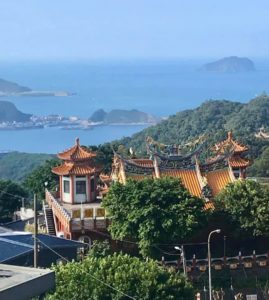
View from Jiufen Taiwan

My Taiwan

Sergio Bersanetti My Taiwan 2 – 16 November 2019 Presentation Taiwan The Republic of China is a collection of islands situated in East Asia. The largest of these was formerly called Formosa and is currently known as Taiwan. With a land area just slightly larger than Belgium, the Republic of China is home to approximately 24 million inhabitants. Its capital city, Taipei, boasts a population of nearly 2.5 million. Relations between the Republic of China and the People’s Republic of China (mainland China) are infamously strained, as both entities claim sovereignty over the other. While only 13 countries around the world officially recognize the Republic of China as a sovereign state, many maintain trade and cooperation relations with it through representative offices that function similarly to embassies. The constant risk of mainland China’s potential invasion and annexation of Taiwan to the People’s Republic looms large, making my upcoming trip to the island all the more significant. Originally planned for 2014 to meet up with friends, unforeseen obstacles caused me to postpone the trip until November 2019. Finally, the time has come, and I am excited to join Yong Xiang and Jing Zhe, who have graciously agreed to guide me as we explore the breathtaking sights of Taiwan. Taiwan post presentation Spoiler alert: in this video I briefly explain what you are going to see and read in this post Arrival in Taipei The Air China flight from Milan to Beijing was enjoyable and arrived on time. However, locating the connecting flight to Taipei has proven to be a challenging task. The airport is crowded with passengers from various flights, and the signage is inadequate and sometimes only in Chinese. The ongoing renovation work is evident from the scaffolding and blocked-off corridors. Unfortunately, the airport authorities have not made any effort to ease the inconvenience for passengers, and the Chinese officials’ attitude is unwelcoming and reminiscent of my experience in Moscow, while travelling to Uzbekistan. At least the airport is interesting and the flight to Taipei feels like it goes by in a flash. Yong Xiang is waiting for me at the exit of Taipei’s airport, and during the metro ride that will take me to the Ximen district, where I have rented a studio apartment, I realise the mountainous and very green nature of the northern part of Taiwan.  https://youtu.be/orSI0siLGe0 From Taipei airport to the city The changing landscape will entertain you Yong Xiang, a prominent LGBT activist in Taiwan, may just be the youngest in the field. If you’ve read my book Revenge, you might recognize his name from the character of a detective in the second part. Despite his young age of 18, I still remember his vibrant personality from videos three years ago, when he would roam the streets of Taipei in a unicorn costume, proudly waving a giant rainbow flag. I was immediately intrigued by such a dynamic individual and knew I couldn’t delay my trip to Taiwan any longer when I found out I could not only meet him but also have him as my guide for a few days. I will now show you a glimpse of Ximen, the neighbourhood where I will be staying for the next 14 days.  https://youtu.be/__O-cbg9On0 Ximen at night Lights, people, noise Ximen area For nightlife lovers Although I didn’t know much about Ximen when I booked my accommodation, I was drawn to its affordable rates and convenient location near public transportation. However, upon arriving, I quickly realize that there is so much more to this vibrant district, especially at night. Like many other Asian cities with a temperate climate, the darkness brings about a lively atmosphere with illuminated giant screens, colorful neon lights, and various food stalls. Street performers, who are highly talented and respected by the Taiwanese, add to the excitement. Despite the crowds, people are eager to step out of their homes to enjoy the night. Whether it is for eating, shopping, attending a show, or simply strolling with friends, the streets are always bustling with activity. For those who love this kind of ambiance, there’s good news: since Taiwan shares the same time zone as mainland China, the night falls early here, giving you more time to enjoy the busy nightlife. Upon seeing a rainbow flag painted on the ground of Ximen’s main square, I have a strong sense that the neighborhood is welcoming to the LGBTQ+ community. Yong Xiang, my guide, confirms this impression and takes me to a lively area with numerous bars and shops, where most customers appear to be gay. The tolerance and acceptance of diverse lifestyles is one of the reasons why many people in Taiwan oppose its integration into the People’s Republic of China. While the loss of voting rights and freedom of expression are the most obvious concerns, the restriction on openly expressing one’s identity is also a significant issue, even for those who are not LGBTQ+. Although homosexuality is no longer a crime in mainland China, it is strictly forbidden to discuss or advertise it in the media. As a result, many LGBTQ+ people in isolated areas face considerable challenges in their daily lives. In contrast, rainbow flags are often displayed outside public and government offices in Taiwan, indicating a commitment to inclusivity. As someone with friends on both sides of the Taiwan Strait, I have learned that opinions about Taiwan’s relationship with China are deeply divided. While many Taiwanese harbor resentment towards China, which is often depicted negatively in the media, there are two opposing views in mainland China. Some advocate for greater openness and support Taiwan’s desire for independence, while others view Taiwan as a wayward child who needs to be disciplined for resisting authority. This disagreement is not about economic benefits, as Taiwan’s thriving economy is widely recognized, but about differing moral values. For some Chinese, Taiwanese society is perceived as too liberal and corrupted by Western influences. Second Day in Taipei Despite feeling tired due to jetlag, I enthusiastically accept Yong Xiang’s invitation to

Leggi Tutto »
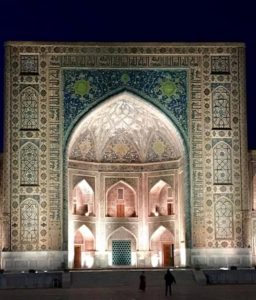
Uzbekistan Registan Samarkand

My Uzbekistan

Sergio Bersanetti My Uzbekistan 5 – 15 Apri 2019 Presenting Uzbekistan The Republic of Uzbekistan, a Central Asian nation comparable in size to Sweden, boasts a population of approximately 35 million. It’s capital is Tashkent, a city with a population of roughly 2,150,000. Interestingly, Uzbekistan shares a rare characteristic with Lichtenstein, both countries are double landlocked, meaning they are only bordered by other landlocked nations. Uzbekistan used to have an enormous water resource within its territory, shared with Kazakhstan: the Aral Sea. Unfortunately, the Soviet Union’s exploitation of the lake’s two primary tributaries since the 1950s to support cotton production led to its near-total depletion, causing an ecological disaster and decimating the local economy. Although the map presented may appear outdated, it accurately reflects the Aral Sea’s former size. Until a few years ago, I must confess that Uzbekistan was just one of many countries ending with “stan” that seemed lost among the vastness of Asia, and I struggled to place it accurately on a map. However, everything changed in 2013, when I conducted an interview with figure skating champion Misha Ge. Despite being more closely related to Russia, Korea and China by birth and upbringing, he represented Uzbekistan in international competitions due to his maternal grandmother’s roots, achieving remarkable results. The interview, which was initially published on a prominent Italian winter sports portal and translated into various languages, (unfortunately the english version is no longer available) caught the attention of Nurali Yuldashev, a sports commentator for state TV and a member of the Uzbek Olympic Committee. He reached out to me to express his admiration, and a solid friendship developed from there. Through Nurali’s Instagram posts, I developed a fascination for Uzbekistan and its culture, to the extent that I longed to visit the country at the earliest opportunity. As I had noted in a previous post on Thailand, the ways in which I encounter people who later become my friends and guides during my travels are diverse and unexpected. Post presentation Uzbekistan Spoiler alert: in this video I briefly explain what you are going to see and read in this post Arrival in Tashkent At Moscow airport, on the evening of April 4th, 2019, I find myself waiting to board a flight to Tashkent. The security personnel at the airport seem to lack even a hint of a smile, as if it were part of their job description. With most shops closed at this time, there isn’t much to do, but fortunately, my flight will be boarding in about 90 minutes, so the unwelcoming atmosphere doesn’t affect my mood too much. Initially hesitant to purchase tickets with Aeroflot due to its reputation as an unsafe airline, I reviewed the dates of the crash reports and found that 90% of them were from the 1970s and 1980s. This convinced me that the Milan-Moscow-Tashkent route was the best option, both in terms of time and cost. The direct flight offered by Uzbekistan Airways was outside my budget, and other solutions with stopovers were either too expensive or too time-consuming. In retrospect, I was satisfied with my experience with Aeroflot, as the essential services provided were justified by the price I paid. As my flight is scheduled to land in Tashkent at 3:30 am, I arranged for the hotel to send a driver to facilitate my transfer, as I anticipated that finding a taxi could be a challenge at that time. However, upon landing, I couldn’t locate the person holding the sign with my name on it. As I exit the airport, I am approached by a group of seven men ranging in age from 25 to 60 years old. Despite feeling somewhat unnerved by the situation, Nurali had assured me of the high security standards in the country, so I remain calm. While none of these men speak English, it quickly becomes apparent that they are eager to assist me. Why they are there and why there are so many of them at 4 am remains a mystery to me, but my priority at the moment is to get to the hotel and rest. Unable to call the hotel with my Italian SIM card and unable to buy a local SIM card at the airport at that hour, I give the hotel phone number to one of the men. Five minutes later, a car that had been parked about a hundred meters away arrives, with the driver who had arrived well in advance and had dozed off! In the end, everything has worked out well, and the Orient Palace hotel exceeds my expectations. Few hours later, still very sleepy but happy, I am thrilled to finally meet Nurali in person and I give him a book on the Turin 2006 Winter Olympics. Nurali has not arrived by car, but I am pleasantly surprised by the Tashkent metro. It was the first metro system in Central Asia, opening in 1977, and all 43 of its stations have unique and captivating themes. I’ll let the pictures do the talking when it comes to the stations’ beauty. Instead, I’d like to express my admiration for the Uzbek people’s warmth and politeness. They never hesitate to offer their seats to me whenever I board public transportation. Tashkent is very clean, vibrant, and walkable, making it an absolute pleasure to traverse on foot. So much so, in fact, that throughout my stay there, I find myself utilizing public transportation solely to reach the city center, from which I embark on leisurely walks to explore the various points of interest, and ultimately make my way back to the hotel, on foot. This daily routine leads me through different neighborhoods and districts, allowing me to take in the diverse and captivating facets of the city’s character, while covering an impressive 20 kilometers each day. Among the many sights and structures that catch my eye during these wanderings, the Humo Arena stands out in particular, with its immense size and reputation as the epicenter of the city’s sports and entertainment scene. The mosque

Leggi Tutto »